Showing posts with label reading. Show all posts

23 August 2011

Trending topic = authentic comprehensible input

foto por Scott Beale

I keep the Mexico trending topics as a column on my Tweetdeck, because you never know what will come up there. One great thing about Twitter is that you can only get so complicated in 140 characters, and when someone gets it in their head to get a topic like #4palabrasqueduelen trending by thousands and thousands of people, the text gets even simpler. So of course I had to mine the tweets using Archivist Desktop, clean them up, and use them for class. This is authentic input, mostly simple phrases written by Spanish speakers for Spanish speakers, most of them about our students' age or just a bit older. Twitter is such a gold mine!

And I can't do something like this without sharing, right? I put them in a spreadsheet, took out the hashtags, fixed the accents that got messed up in the transfer, deleted the trash, and deleted the repeats like the unending versions of "ya no te quiero." (Twitter is so dramatic.) I also only kept 50 of them - the program mined 2000 tweets.

After your students read them, take a poll of what are the favorites. Then see what are their #4palabrasqueduelen - o mejor, #4palabrasquealegran, a great suggestion from @SraHeebsh.

23 June 2011

Flipbook illustration

This post is part of my project to get rid of old (but useful) papers that have been sitting on my bookshelf.

This is another literacy idea I got from a grad school class on teaching literacy to ELLs.

Materials:
  • 3 sheets of 8 1/2 by 11 blank paper
  • stapler
  • drawing tools
Directions:
  • Place the three sheets of paper on top ofeachother, and overlap leaving a small margin at the bottom of the paper.
  • Hold the pages securely so that they remain overlapped, and fold the top sheet so that its top edge folds to a small margin above its bottom. There should now be six "pages" now in the flipbook.
  • Staple through all layers at the fold. On the top page, write the title of the book, the author, and your name.
  • Illustrate and write about an important event (ones you find significant) on each of the following five pages.
This project teaches students to look at literature more critically because they have to identify and illustrate significant events. Also, you can add a variety of activities, including retelling the story with the activities, explaining symbolism, writing new endings, collaboration, etc. I've also had students do this about a story told in class.

Keep reading!

13 June 2011

Symbol Illustration


This post is part of my project to get rid of papers I haven't looked at in forever (but still contain good ideas) by making them 'digital' here.
The symbol illustration idea is from a course I took in graduate school on teaching literacy to (mostly elementary) English-language learners. It seemed to me an idea easily adapted to various situations, content, and levels.

Materials:
  • colored paper
  • scissors
  • markers
Directions:
After reading and discussing some type of literature together (in my course it was Esperanza Rising),
  1. Decide what you think is the most important object in the book.
  2. Cut a large sheet of colored paper into the shape of that object.
  3. In the middle of the object, write a sentence describing why you think that was the most important object.
  4. In the rest of the space, draw other important objects, with a sentence under each that describes its importance.
My symbol illustration of Esperanza Rising:
Some variations:
Ask for an oral presentation of the symbol illustration when it is finished.
Make the illustration a timeline instead - on a long sheet of paper, draw a line horizontally in the middle. Above, put positive symbols. Below, put negative symbols. All should be sequential and should be used to retell the story emphasizing mood changes.
Ask students to choose a symbol that may also symbolize something in their life and describe this.
Use VoiceThread or other storyboarding or digital storytelling tools to make this project digital/paperless.

04 February 2011

Ciudad de las bestias: Guides public & streamlined

I wrote here about what I've done with the book Ciudad de las bestias by Isabel Allende in my AP class. I recently put all of the chapter guides with their "palabras claves" in one streamlined Google doc, public on the web. It should be easier to use and as always happens with time, more accurate as my students find mistakes (like incorrect page numbers) and I fix them. If you have any suggestions or comments, as always those are welcome.

A few notes about the guides/words:
- The guides get longer because 1) the students become more capable and less in shock and 2) the chapters get more complicated in regards to the plot
- I use a "did you read" question at the end of every guide, worth at least 10 points, more according to the length of the chapter
- sometimes there's a ¿? instead of a definition of a "palabra nueva" because while the phrase itself is new, it's related to words the students know, and so I think they should be able to figure it out (e.g. desangrar).
- at this level my students read mostly on their own but we try to make time for it in class, and the day it's due they come in with questions and we read through tough sections together - this lessens their frustration

Have you thought about writing guides to literature for your own class-- and sharing them for other teachers? Collaboration is the 21st-century skill. :)

01 October 2010

In the spirit of open source: Ciudad de las bestias

Want to guide your advanced students through a culturally-relevant novel by a Hispanic author, written specifically to adolescents? Good! Intensive reading for pleasure is the best way to acquire vocabulary in any language.

I've put an incredible amount of work into writing reading guides and vocabulary lists for all 20 chapters of Ciudad de las bestias by Isabel Allende.

In the story, Alex, a 15-year-old Californian, must spend some time with his eccentric grandmother while his mother receives cancer treatment in Texas. His grandmother is a nonfiction adventure writer, about to leave with a team from "International Geographic" for the Amazon, in search of the (mythical?) Bestia--the 'abominable jungleman.' Alex's presence can't throw a wrench in her plans so he must tag along. Suddenly the California boy finds himself in the middle of the Amazon, picking off leeches, swimming with dolphins, befriending a young Brasilian-Canadian girl with whom he gets kidnapped and must embark on a journey to answer tough questions about who gets to use what in the jungle and what the future holds for the indigenous peoples of the Amazon, as well as where his true riches are and where he can find purpose.

Sound like culture? communication? motivating subject matter for teenagers?

My reading guides aren't perfect--just the other day one of my students pointed out I hadn't put page numbers on a few questions-- but here they are, and I encourage you to see the power of reading come alive for your advanced students.

**UPDATE 3 FEB 2011** For new info on these guides, see this post.

I'll try to post some tips on class novel reading soon, but my first one would be to start reading together before assigning it outside of class, so students can get used to the big keys which are:
1-read the question first so you know the big idea you're looking for
2-read so you understand the gist, but not so you understand every word.

23 September 2010

Books recommended as 'easy'

I found a helpful post on Amazon.com where someone recommends easy novels to read while learning Spanish. I hope to order them and see whether they might be good for Spanish 2, since I'm all about feeding kids authentic rather than learner Spanish from the beginning.

One is La Tierra del Fuego, and the other is El Clan de la Loba/La Guerra de las Brujas.

For Bethanie, who asked a long time ago, and anyone else who cares.

**update**
Here are a couple of other options recommended to me via Twitter and Amazon:
A children's sensation in Spain, Manolito Gafotas (if you can find enough copies en español)
The last of the Manolito series, Manolito Tiene un Secreto
Adventure novel Limpieza de sangre
El pirata Garrapata (and sequels)

11 November 2009

A case for pleasure reading

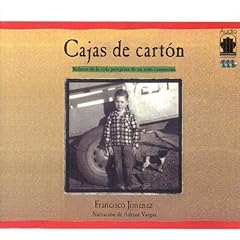
Stephen Krashen has done a ton of research on what he calls Free Voluntary Reading. Catch up on his research by checking it out on his website. Basically, the premise is that kids learn more (and language learners acquire more vocabulary) when reading at an appropriate leve and something that is pleasurable to them. I was so won over by the research in this area that last year I decided my students were going to read a fiction book outside of class. Mi criteria were that the book had to be related to Latin culture in some way, preferably by a Latino/a author. As a result, my students read Cajas de cartón in the fall of Spanish 3, Esperanza renace in the spring of Spanish 3, and Ciudad de las bestias in AP Spanish. Watching my AP Spanish students read now, after reading the two books last year, I can see how much their reading comprehension has jumped. Also, they could tell you countless stories of how certain vocabulary are imprinted in their memories because of reoccurrences in context in the books, which they like.

Last year I had them read the chapter and then take an open-book quiz in class the day the chapter was due. There were some problems with that, especially that it was very time-consuming and I value my in-class time too much. So this year, they are doing reading guides instead, and this has worked wonderfully. As a taste, here is the list of Palabras Claves and here is the Reading Guide for Chapter 10 of Ciudad. I'm a firm believer in not reinventing the wheel, so if you want any or all of the reading guides (and vocab lists) message me on twitter at secottrell and I'll upload them all to my Google Docs.

Get kids reading level-appropriate fun stories--it works!

20 September 2009

For you French teachers

This weekend I was at the fall conference of the Kentucky World Language Association (phenomenal!) and after I gave my presentation on YouTube and pop music, it occurred to me I should have offered the French teachers present the url of my favorite French-teaching cyberamiga Diane (@parisprimrose), Foreign Language Fun.

03 October 2008

Reading in Spanish 3


I firmly believe that the best way to acquire new vocabulary is to hear it or read it, in context, in multiple contexts, many times. So, personally, I read in Spanish whenever I have the time. I rarely read fiction in English. This year I've been really in to Isabel Allende's Zorro and Inés del Alma Mía and García Marquez--specifically, Noticia de un secuestro, and now I'm reading Amor en los tiempos de cólera.


Along that line of thinking, my Spanish 3 students also read. I dislike asking them to read/view things that are decidedly American (especially WASP American) that were translated into Spanish. If we're really dedicated to all the 5 C's, we need to include stuff that's culturally rich and relevant. So, in the fall of Spanish 3 we read Cajas de cartón, Francisco Jimenez's story of how he came to the U.S. as an illegal child immigrant with his family in the 1950's. The students take a quiz over each chapter as the semester progresses, and then once a quarter I add up the grades for a test grade. In case anyone might find them useful and/or have constructive comments, I'll probably upload my quizzes for the book soon. So far I've only written them for chapters 1-5.


In case you're interested, the book we'll read in the Spring is Esperanza renace by Pam Muñoz Ryan, also an immigrant child story but from a different time and perspective (think "The Little Princess" for a Mexican aristocrat's daughter). The book I'm looking at for AP next year is Ciudad de las bestias by Allende. (I'm not sure my students will be ready for Zorro or I'd pick that one.)